
How Korea’s modern medical system helps residents breathe easier in a fast-paced, urban world.
Breathing should be effortless.
But for many people living in modern cities — especially Seoul — it isn’t.
Seasonal allergies, dust, pollution, food sensitivities, chronic sinus issues, and immune-related conditions have become part of everyday life. And while many countries struggle with slow testing and limited treatment options, Korea has built one of the fastest, most accurate, and most accessible allergy & immunology systems in Asia.
Foreigners often say:
“I finally understood my allergies after coming to Korea.”
This article explores how Korea diagnoses and treats allergies with speed, precision, and modern medical science — helping people breathe easier in one of the world’s busiest urban environments.
🌿 Why Allergies Are So Common in Korea
Korea’s environment creates a unique allergy landscape:
✔ Yellow dust (황사)
✔ Fine dust (미세먼지)
✔ Humid summers
✔ Cold, dry winters
✔ High pollen seasons
✔ Urban pollution
✔ Indoor heating & cooling cycles
Foreigners often develop new allergies after moving to Korea — or discover allergies they never knew they had.
This is why Korea’s allergy & immunology clinics are so busy, and so advanced.
🌿 The Korean Allergy Experience: Fast, Clear, and Science-Based
Foreigners often describe Korean allergy clinics as:
✔ Fast
✔ Organized
✔ Modern
✔ Affordable
✔ Easy to navigate
Korea’s medical system is designed for speed and accuracy, and allergy care follows the same philosophy.
🌿 How Allergy Diagnosis Works in Korea
Korea uses a multi-step diagnostic system that blends ENT medicine, immunology, pulmonology, and dermatology.
🔵 1) Initial Consultation: Understanding Your Breathing Story
Doctors begin with:
- Breathing patterns
- Sinus symptoms
- Seasonal triggers
- Food reactions
- Skin issues
- Sleep quality
- Environmental exposure
- Stress levels
Korean doctors are trained to identify allergy patterns quickly.
🔵 2) Allergy Blood Test (IgE Panel)
One of Korea’s most popular tests.
Measures:
- Total IgE
- Specific allergens (dust, pollen, mold, food, animals)
- Immune response intensity
Results come back within 1–3 days, much faster than many Western countries.
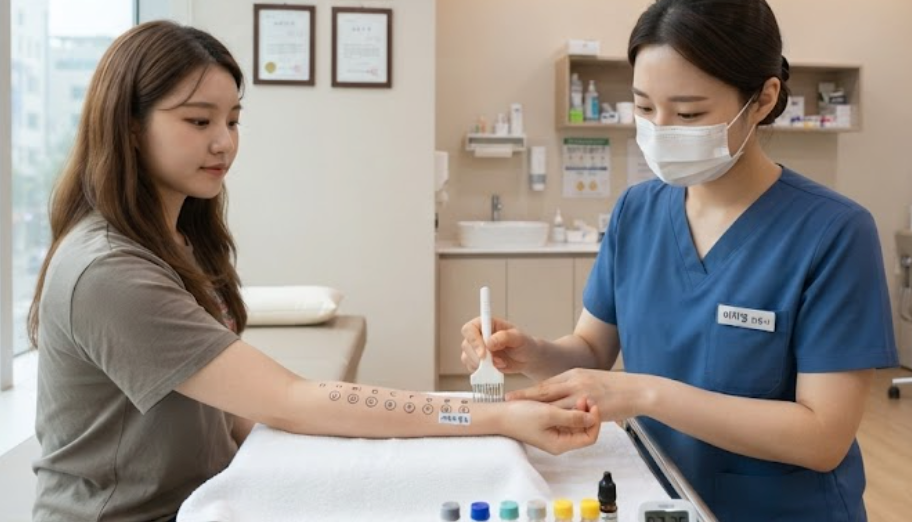
🔵 3) Skin Prick Test (SPT)
A classic allergy test used worldwide.
Tests for:
- Pollen
- Dust mites
- Mold
- Animal dander
- Food allergens
Korean clinics perform SPT with high precision and clear interpretation.
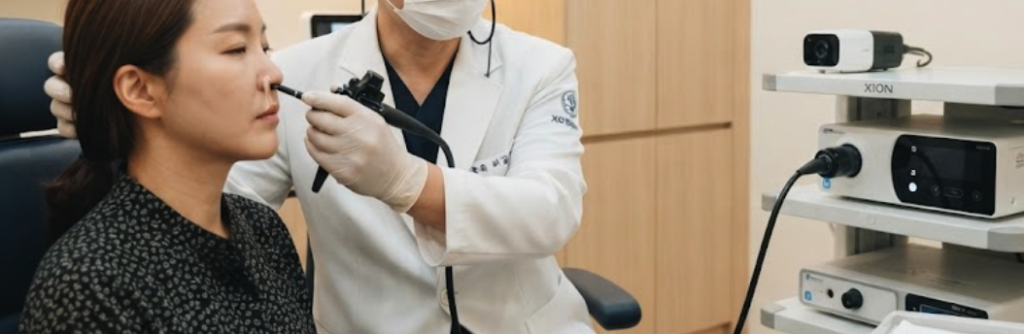
🔵 4) Sinus & Airway Examination
ENT specialists use:
- Nasal endoscopy
- CT scans
- Airflow tests
- Mucus analysis
Korea’s ENT equipment is extremely modern, making diagnosis fast and accurate.
🔵 5) Lung Function Testing
For asthma or breathing issues.
Measures:
- Airflow
- Lung capacity
- Bronchial sensitivity
Pulmonology clinics in Korea are known for fast scheduling and modern machines.
🌿 Common Allergies Treated in Korea
Korean clinics treat a wide range of allergies:
✔ Allergic rhinitis (비염)
✔ Sinusitis
✔ Dust & pollen allergies
✔ Food allergies
✔ Atopic dermatitis
✔ Asthma
✔ Chronic cough
✔ Mold sensitivity
✔ Pet allergies
✔ Skin reactions
Foreigners often discover dust mite allergies after moving to Korea — one of the most common triggers.
🌿 Treatment Options in Korea: Modern, Fast, and Effective
Korea offers a full spectrum of allergy treatments.
🔵 1) Medication
Common options include:
- Antihistamines
- Nasal sprays
- Leukotriene inhibitors
- Steroid sprays
- Asthma inhalers
Korean pharmacies dispense medication in minutes, and prices are low.
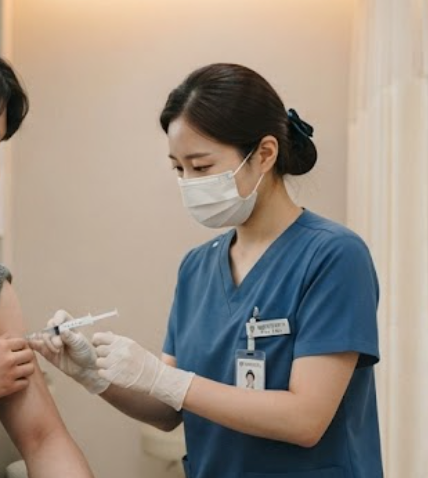
🔵 2) Immunotherapy (Allergy Shots)
One of Korea’s strongest specialties.
Helps with:
- Dust allergies
- Pollen
- Mold
- Pet allergies
Immunotherapy retrains the immune system over time — reducing symptoms long-term.
🔵 3) Sublingual Immunotherapy (SLIT)
Drops or tablets placed under the tongue.
Benefits:
- No injections
- Home treatment
- Safe for children
- Effective for dust & pollen
Korea is one of the fastest adopters of SLIT in Asia.
🔵 4) Sinus Treatment
For chronic sinus issues:
- Nasal irrigation
- Anti-inflammatory sprays
- Antibiotics (when needed)
- Endoscopic sinus surgery (for severe cases)
Korean ENT surgeons are known for precision and minimally invasive techniques.
🔵 5) Asthma Management
Includes:
- Inhalers
- Lung function monitoring
- Trigger control
- Allergy treatment
- Stress management
Korea’s asthma care is highly structured and easy to follow.
🌿 Why Foreigners Prefer Korean Allergy Care
Foreign residents often say Korea’s allergy system feels:
✔ Clear
✔ Efficient
✔ Modern
✔ Affordable
✔ Multilingual
✔ Science-driven
Benefits include:
- English-speaking doctors
- International hospitals
- Fast scheduling
- Modern equipment
- Clear explanations
- Affordable testing
- Easy follow-up care
Korea is one of the easiest countries for foreigners to get allergy treatment.
🌿 Costs: Allergy Diagnosis & Treatment in Korea
Approximate prices (without insurance):
- Consultation: ₩20,000–₩40,000
- IgE blood test: ₩40,000–₩120,000
- Skin prick test: ₩30,000–₩80,000
- Nasal endoscopy: ₩30,000–₩60,000
- Lung function test: ₩20,000–₩40,000
- Immunotherapy: ₩20,000–₩50,000 per session
With insurance, many costs drop significantly.
🌿 Conclusion: Korea Helps You Breathe Easier
Korea’s allergy & immunology system blends:
- Fast diagnostics
- Modern equipment
- Clear communication
- Affordable treatment
- Strong ENT & pulmonology integration
- Advanced immunotherapy
- Patient-centered care
For foreigners struggling with allergies, Korea offers clarity, comfort, and effective treatment — helping people breathe easier in a fast-paced world.
Korea is not just a leader in dermatology and surgery.
It is becoming a global leader in modern allergy & immunology care.