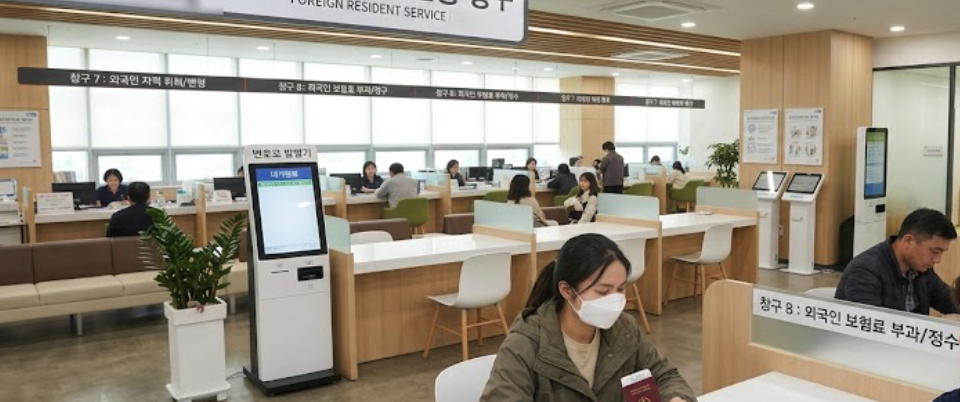

Korea’s National Health Insurance (NHI) system is one of the most efficient and affordable healthcare systems in the world. For foreigners living in Korea, understanding how the system works can dramatically reduce medical costs and make hospital visits much easier.
This guide explains how foreigners can join the health insurance system, how much it costs, what benefits it provides, and how it affects hospital bills.
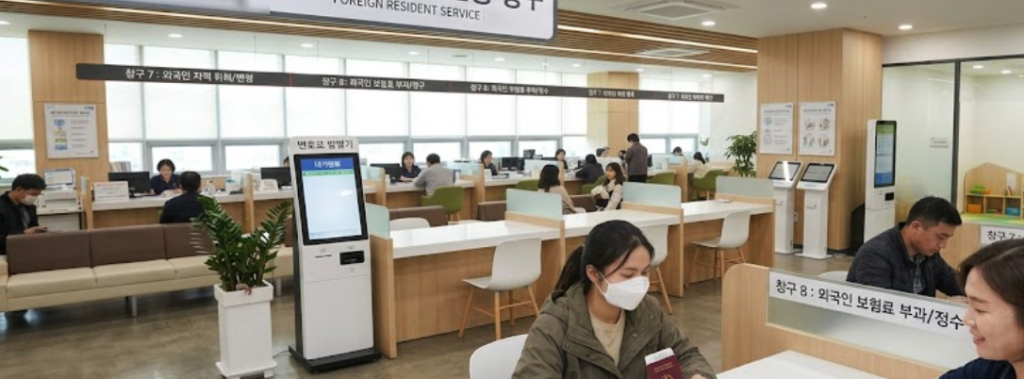
🏥 What Is Korea’s National Health Insurance (NHI)?
The National Health Insurance (국민건강보험) is Korea’s public healthcare system.
It covers a large portion of medical costs, including:
- Hospital visits
- Emergency room care
- Dental treatments
- Prescription medication
- Tests and imaging
- Surgeries
- Physical therapy
Foreign residents with an Alien Registration Card (ARC) can join the system and receive the same benefits as Korean citizens.
👤 Who Can Join?
Foreigners can join NHI if they meet one of the following:
✔ You have an Alien Registration Card (ARC)
Issued after registering at the immigration office.
✔ You stay in Korea for 6 months or longer
Most foreigners become eligible after 6 months of residence.
✔ You work for a company in Korea
Your employer automatically registers you for employee insurance.
✔ You are a student with long-term stay
Universities often help students enroll.
📝 How to Apply for Health Insurance
If your employer does not register you automatically, you can apply yourself.
Where to apply:
- National Health Insurance Service (NHIS) office
- NHIS website
- NHIS mobile app
What you need:
- Passport
- ARC
- Proof of residence (rental contract)
- Contact information
The process usually takes 10–20 minutes.
💰 Monthly Cost for Foreigners
The cost depends on your situation.
✔ Employee Insurance (직장가입자)
If you work for a company:
- Your employer pays half
- You pay half
- Typical monthly cost: 70,000–120,000 KRW
✔ Local Insurance (지역가입자)
If you are self-employed, a student, or unemployed:
- You pay the full amount
- Typical monthly cost: 120,000–150,000 KRW
✔ Students
Some universities offer discounted plans.
💸 How Much Does Insurance Reduce Medical Costs?
Health insurance dramatically lowers medical expenses.
Examples:
🏥 Hospital Visit (Internal Medicine)
- Without insurance: 30,000–50,000 KRW
- With insurance: 5,000–10,000 KRW
🦷 Dental Scaling
- Without insurance: 50,000–100,000 KRW
- With insurance: 10,000–20,000 KRW
🚑 Emergency Room
- Without insurance: 80,000–200,000 KRW
- With insurance: 10,000–40,000 KRW
💊 Prescription Medication
- Without insurance: 10,000–30,000 KRW
- With insurance: 3,000–10,000 KRW
Insurance usually covers 50–80% of medical costs.
🧾 What Is Covered?
✔ Covered:
- Hospital visits
- Specialist consultations
- Blood tests
- X-rays
- CT scans
- Ultrasound
- Surgeries
- Dental scaling
- Root canals
- Emergency room care
- Physical therapy
- Prescription medication
❌ Not covered:
- Cosmetic procedures (botox, filler, laser)
- Orthodontics
- Whitening
- Plastic surgery
- Some dental treatments (veneers, implants)
🏥 How to Use Insurance at the Hospital
Using insurance is simple.
1. Bring your ARC
Your ARC number is your insurance ID.
2. Register at the reception
Tell them you have NHI.
3. Receive treatment
Doctors automatically apply insurance.
4. Pay discounted fee
You only pay the remaining portion.
Hospitals automatically check your insurance status in their system.
💳 Paying for Treatment
Korean hospitals accept:
- Credit cards
- Debit cards
- Mobile payments (Kakao Pay, Naver Pay)
- Cash
Most foreigners use cards or mobile payments.
📱 Useful Apps
- NHIS App – check insurance status
- KakaoMap / Naver Map – find hospitals
- KakaoTalk – many clinics allow reservations
🧭 What a Typical Visit Looks Like
- You enter the hospital
- Show your ARC
- Fill out a short form
- Doctor examines you
- Tests if needed
- Receive treatment
- Pay discounted fee
- Get prescription (if needed)
- Visit pharmacy
The entire process is fast and organized.
🌐 Why Foreigners Appreciate Korean Health Insurance
- Affordable monthly cost
- Huge reduction in medical bills
- Fast and efficient system
- Easy to use
- High-quality healthcare
- Modern hospitals
- Clear pricing
Many foreigners say Korean healthcare feels “high-tech, affordable, and extremely organized.”

[…] Korean National Health Insurance Guide for Foreigners […]