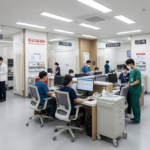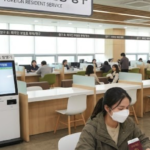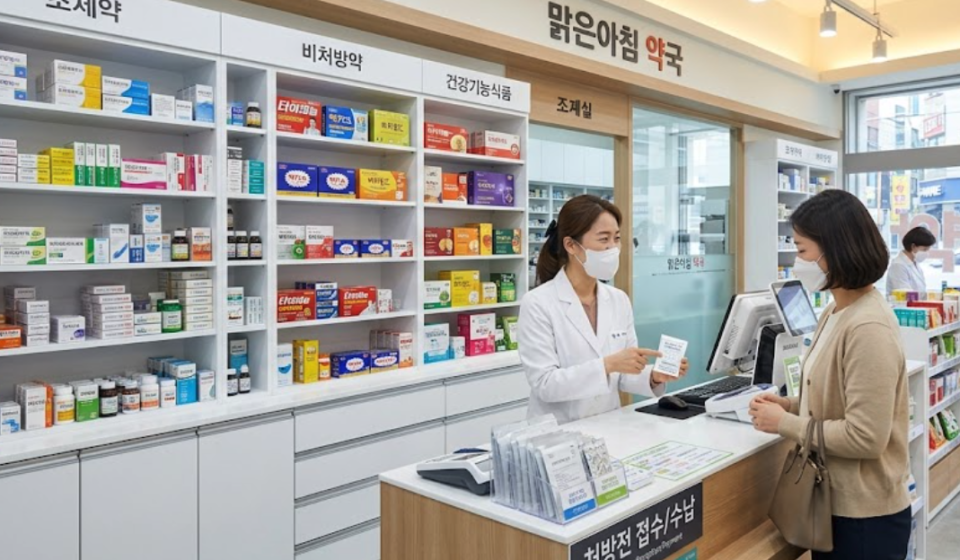

Visiting a pharmacy in Korea is simple once you understand how the system works. Pharmacies are everywhere, the staff is helpful, and many common medications are available without a prescription. For foreigners, knowing what you can buy—and how to ask for it—makes daily life much easier.
This guide explains how Korean pharmacies operate, what medicines you can buy over the counter, and how to handle prescriptions from hospitals.
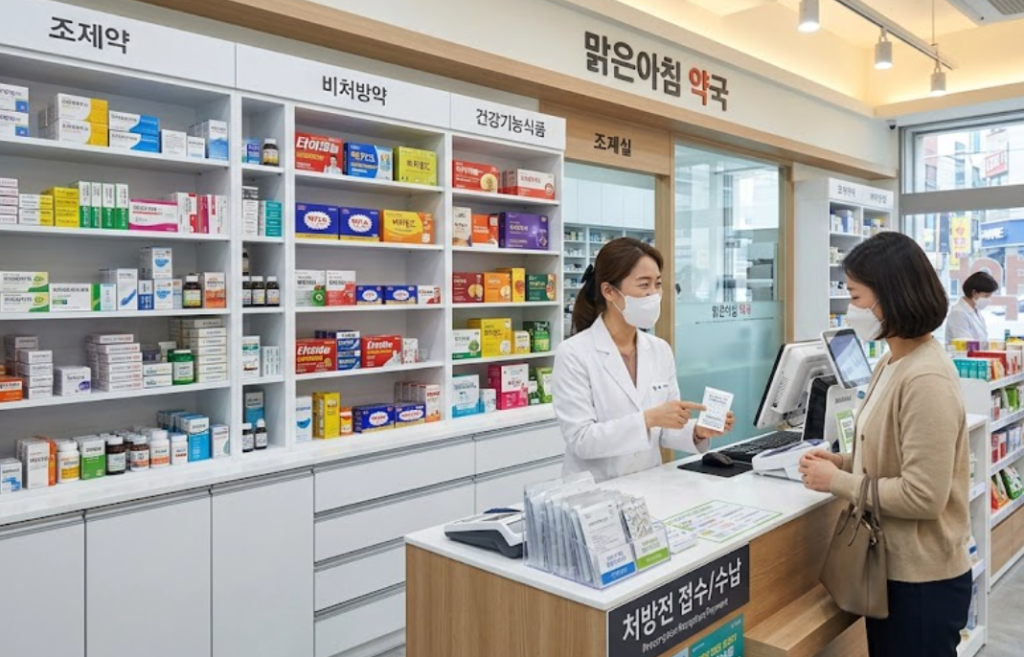
💊 Types of Pharmacies in Korea
Korea has two main types of pharmacies:
1) General Pharmacies (약국)
These are the most common.
You can buy:
- Cold medicine
- Pain relievers
- Digestive aids
- Allergy medication
- Eye drops
- Ointments
- Bandages
General pharmacies are usually open during normal business hours.
2) Hospital-Linked Pharmacies (처방전 약국)
Located near hospitals and clinics.
These pharmacies specialize in filling prescriptions.
You’ll often see several pharmacies clustered around a hospital—this is normal in Korea.
🕒 Pharmacy Hours
Most pharmacies operate:
- Weekdays: 9 AM – 7 PM
- Saturdays: 9 AM – 2 PM
- Sundays/Holidays: Closed
But in busy areas, you can find:
- 24-hour pharmacies
- Late-night pharmacies
Search “약국” on KakaoMap or Naver Map to find nearby options.
🧾 How to Buy Medicine Without a Prescription
Korea allows many medications to be sold over the counter.
You simply tell the pharmacist your symptoms, and they will recommend the right product.
Useful phrases:
- “I have a cold.” → 감기예요
- “I have a headache.” → 두통 있어요
- “My stomach hurts.” → 배 아파요
- “I have allergies.” → 알러지 있어요
- “I need something for digestion.” → 소화제 필요해요
Pharmacists in Korea are knowledgeable and often ask follow-up questions to give you the right medicine.
🤧 Common Over-the-Counter Medicines in Korea
Here are the medicines foreigners buy most often.
🌡️ 1. Cold & Flu Medicine
Korean cold medicine usually targets multiple symptoms at once.
Popular options:
- Panpyrin (판피린) – fever, aches, congestion
- Tayno (타이노) – cold symptoms
- Coldaewon (콜대원) – cold & flu
These are strong and effective, but can make you sleepy.
🤕 2. Pain Relievers
Ibuprofen and acetaminophen are widely available.
Brands:
- Brufen (부루펜) – ibuprofen
- Tylenol (타이레놀) – acetaminophen
Tylenol is extremely popular and often sells out during flu season.
🤢 3. Digestive Medicine
Korean digestive medicine is very effective and comes in many forms.
Popular options:
- Gasin tablets (가스명) – bloating
- Dongkook enzyme (동국 소화제) – indigestion
- Bearse (베아제) – enzyme supplement
These are commonly used after heavy meals.
🤧 4. Allergy Medicine
Korea has strong seasonal allergies, so antihistamines are easy to find.
Brands:
- Clarityn (클라리틴)
- Allegra (알레그라)
- Zyrtec (지르텍)
Non-drowsy options are widely available.
🩹 5. Ointments & First Aid
Popular items:
- Madecassol (마데카솔) – wound healing
- Fucidin (후시딘) – antibiotic ointment
- Betadine (포비돈) – disinfectant
- Bandages (밴드)
Madecassol is especially famous among foreigners.
👀 6. Eye Drops
Brands:
- Tears Again (인공눈물) – dry eyes
- Eye2O (아이투오) – irritation relief
Eye drops are inexpensive and easy to find.
🧑⚕️ Prescription Medicine (처방전)
If you visit a hospital or clinic, you’ll receive a prescription slip.
Take it to any pharmacy near the hospital.
What you need:
- Prescription slip
- ARC or passport
The pharmacist will prepare your medication in small labeled packets, often divided by time of day (morning, afternoon, evening). This is very common in Korea.
💰 Costs
Korean medication is generally affordable.
Over-the-counter:
- Cold medicine: 5,000–12,000 KRW
- Pain relievers: 3,000–8,000 KRW
- Digestive aids: 3,000–10,000 KRW
- Allergy meds: 7,000–15,000 KRW
Prescription meds:
- With insurance: 3,000–10,000 KRW
- Without insurance: 10,000–30,000 KRW
Prices vary depending on the brand and dosage.
📱 Useful Apps for Pharmacy Searches
- KakaoMap – find nearby pharmacies
- Naver Map – check hours and reviews
- Google Reviews – find English-friendly pharmacies
- NHIS app – check insurance coverage
🧭 What a Typical Pharmacy Visit Feels Like
Living in Korea, a pharmacy visit usually goes like this:
- You walk in and describe your symptoms
- The pharmacist recommends a product
- They explain dosage clearly
- You pay quickly (card or mobile payment)
- You leave within 3–5 minutes
The entire process is fast, simple, and efficient.
🌐 Why Foreigners Appreciate Korean Pharmacies
- Easy access
- Helpful pharmacists
- Affordable medication
- Clear instructions
- Fast service
- Strong over-the-counter options
Many foreigners say Korean pharmacies feel “organized and friendly,” and that the convenience makes daily life much easier.