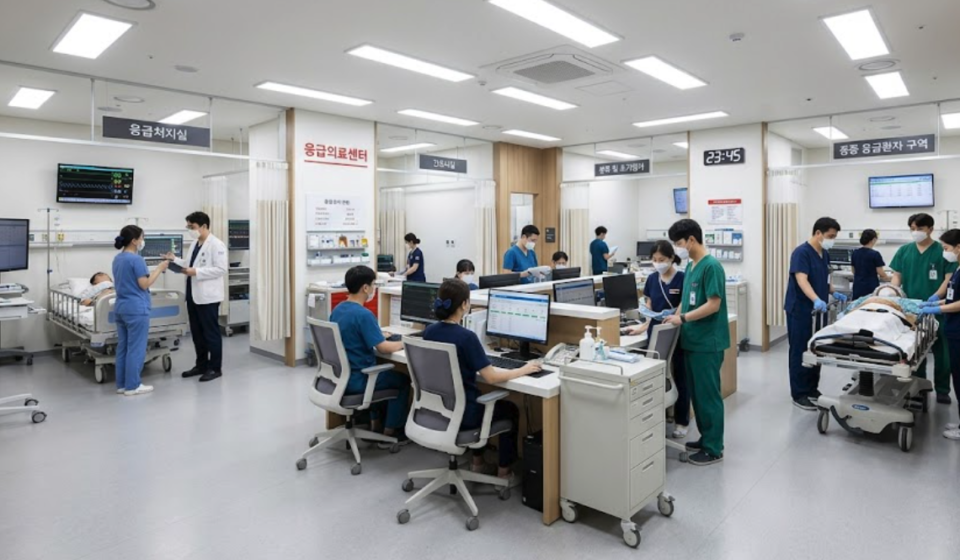

Visiting an emergency room in a foreign country can feel overwhelming, especially when you’re unsure about the system, costs, or what to expect. Korea’s ER system is fast, organized, and highly structured, but it works differently from what many foreigners are used to. This guide explains how the emergency room works in Korea, what happens when you arrive, and how to prepare for unexpected situations.
🚑 When You Should Go to the ER
Korea’s emergency rooms are designed for serious or urgent conditions.
Common reasons people visit include:
- Severe pain (chest, abdomen, head)
- High fever that doesn’t go down
- Difficulty breathing
- Major injuries or fractures
- Severe allergic reactions
- Uncontrolled bleeding
- Loss of consciousness
- Stroke or heart attack symptoms
For minor issues—like mild cold symptoms or simple stomach discomfort—urgent care clinics or regular hospitals are usually better.
📞 Calling 119 (Korea’s Emergency Number)
Korea’s emergency number is 119, not 911.
It connects you to fire, rescue, and medical emergency services.
What’s helpful:
- Operators often speak basic English
- They dispatch an ambulance immediately
- Ambulance service is free
- They take you to the nearest appropriate hospital
If you’re unsure whether your condition is serious, calling 119 is still acceptable. They will guide you.
🏥 Arriving at the ER: What Happens First
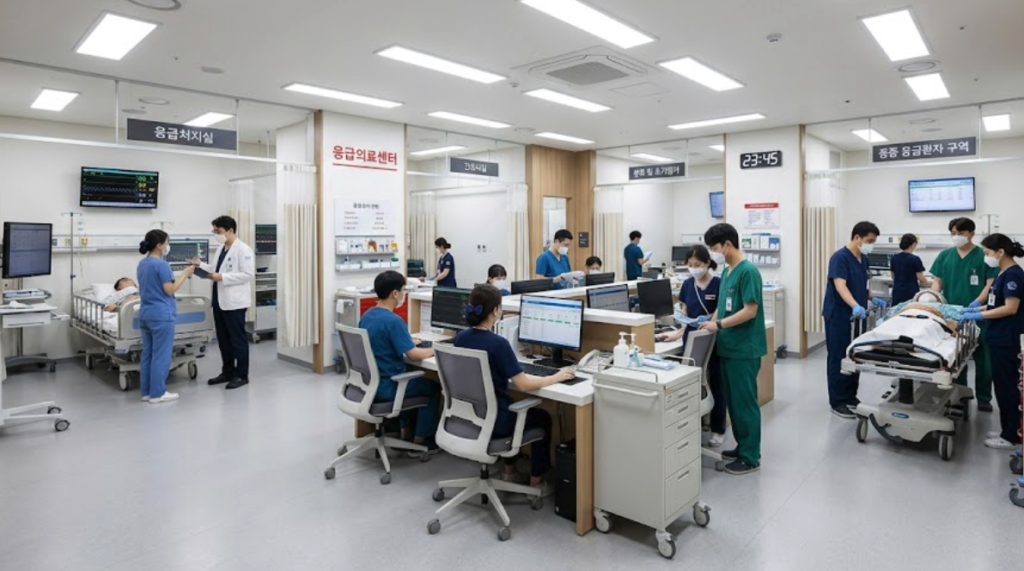
Korean emergency rooms follow a structured triage system.
When you arrive, the process usually looks like this:
1. Triage Desk
A nurse checks your symptoms, vital signs, and urgency level.
This determines how quickly you’ll be seen.
2. Registration
You provide:
- Alien Registration Card (ARC)
- Passport (if no ARC)
- Insurance information
If you don’t have Korean National Health Insurance, you can still receive treatment.
3. Initial Examination
A doctor evaluates your condition.
Depending on symptoms, they may order:
- Blood tests
- X‑rays
- CT scans
- Ultrasound
- ECG
Korean ERs are equipped with advanced imaging tools, so tests happen quickly.
💰 ER Costs in Korea
Costs vary depending on tests and treatment.
With Korean National Health Insurance:
- Basic ER visit: 10,000–40,000 KRW
- Tests (blood, X‑ray): 10,000–50,000 KRW
- CT scan: 70,000–150,000 KRW
- Ultrasound: 40,000–100,000 KRW
Without insurance:
- Basic ER visit: 80,000–200,000 KRW
- CT scan: 200,000–400,000 KRW
- Ultrasound: 100,000–200,000 KRW
Ambulance service is free, regardless of insurance.
🧪 Common Tests You Might Receive
Korean ERs tend to be thorough.
Even for moderate symptoms, doctors often order tests to rule out serious issues.
Common tests:
- Blood panel
- Urinalysis
- X‑ray
- CT scan
- ECG
- Ultrasound
Results are usually available within 30–60 minutes.
💊 Treatment and Medication
After diagnosis, treatment may include:
- IV fluids
- Pain medication
- Antibiotics
- Anti-inflammatory drugs
- Allergy medication
- Wound care
- Splints or casts
If medication is needed after discharge, you’ll receive a prescription to take to a pharmacy.
🛏️ Hospital Admission
If your condition requires further care, the ER may recommend admission.
Admission reasons:
- Severe infection
- Major injury
- Surgery needed
- Heart or lung issues
- Unstable vital signs
Admission costs vary widely depending on room type and treatment.
🌐 English-Friendly Hospitals
Many large hospitals in Korea have international centers with English-speaking staff.
Popular options:
- Seoul National University Hospital
- Asan Medical Center
- Samsung Medical Center
- Severance Hospital
- Catholic University Seoul St. Mary’s Hospital
These hospitals are well-equipped and familiar with foreign patients.
📱 Useful Apps for Emergencies
- KakaoMap / Naver Map: Find nearest ER
- Google Reviews: Check foreigner-friendly hospitals
- KakaoTalk: Some hospitals allow chat-based inquiries
- National Health Insurance app: Check coverage
🧭 What a Typical ER Visit Feels Like
Living in Korea, an ER visit usually follows this flow:
- You arrive or come by ambulance
- Triage nurse checks your condition
- Registration and insurance check
- Doctor examines you
- Tests are ordered
- Results come quickly
- Treatment begins
- Payment and discharge
The entire process is efficient and predictable.
Even during busy hours, staff work quickly and systematically.
💡 Why Foreigners Appreciate Korean ERs
- Fast diagnosis
- Advanced equipment
- Clear structure
- Affordable with insurance
- Free ambulance service
- Clean facilities
- Professional staff
Many foreigners say Korean ERs feel “organized and calm,” even during emergencies.