
Korea is widely recognized as one of the most advanced countries in cancer diagnosis and surgical treatment. Foreign patients choose Korea because of its fast diagnostic system, high surgical success rates, modern medical facilities, and strong international patient support. This extended guide provides everything foreign patients need to know—from preparation before traveling to Korea, to surgery, recovery, costs, and long‑term stay information.
🏥 1. Key Features of Korea’s Medical System
Korea’s healthcare system is known for being fast, efficient, and highly accurate. These strengths are especially visible in cancer diagnosis and surgery.
✔ Fast Diagnostic Process
In many countries, CT, MRI, or PET‑CT scans require weeks of waiting.
In Korea, most major hospitals can perform these tests within 1–3 days, allowing patients to receive results and treatment plans quickly.
✔ Short Waiting Time for Surgery
After diagnosis, surgery scheduling is generally fast.
Large hospitals can confirm surgery dates within 2–4 weeks, depending on the patient’s condition and urgency.
✔ High Accessibility
Korea has numerous large hospitals across major cities.
Transportation, accommodation, and convenience facilities are well developed, making it easy for foreign patients to navigate.
✔ International Patient Centers
Most major hospitals operate dedicated international centers offering:
- English, Chinese, Arabic interpretation
- Appointment assistance
- Insurance and payment guidance
- Visa and administrative support
- Cost estimates before treatment
These services help foreign patients receive care without language or administrative barriers.
🧬 2. Why Korea Is Strong in Cancer Surgery
Korea’s cancer treatment outcomes are among the best in the world.
This is due to a combination of advanced technology, multidisciplinary care, and highly experienced medical teams.
✔ Multidisciplinary Team (MDT)
Korean hospitals use a collaborative system where specialists from surgery, oncology, radiology, pathology, and radiation oncology review each case together.
This ensures accurate treatment planning and reduces unnecessary procedures.
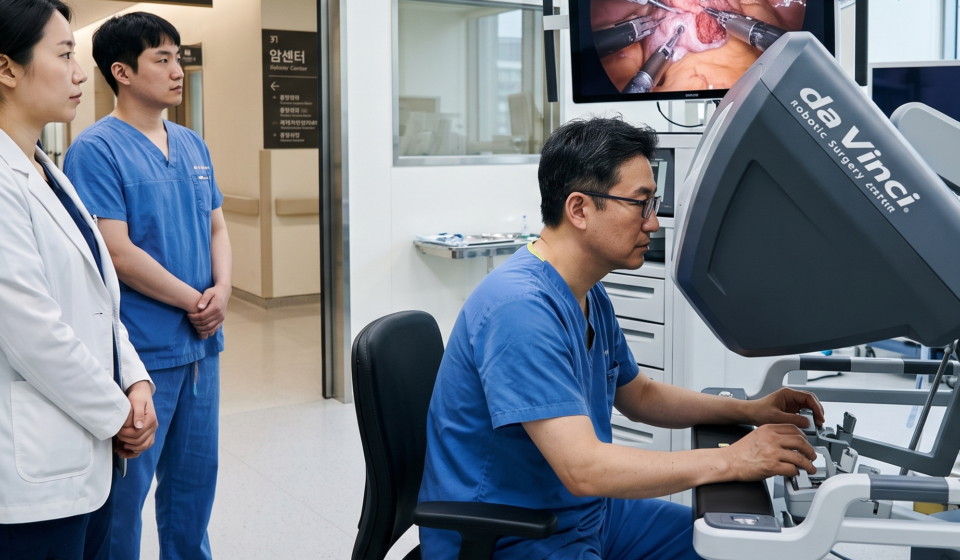
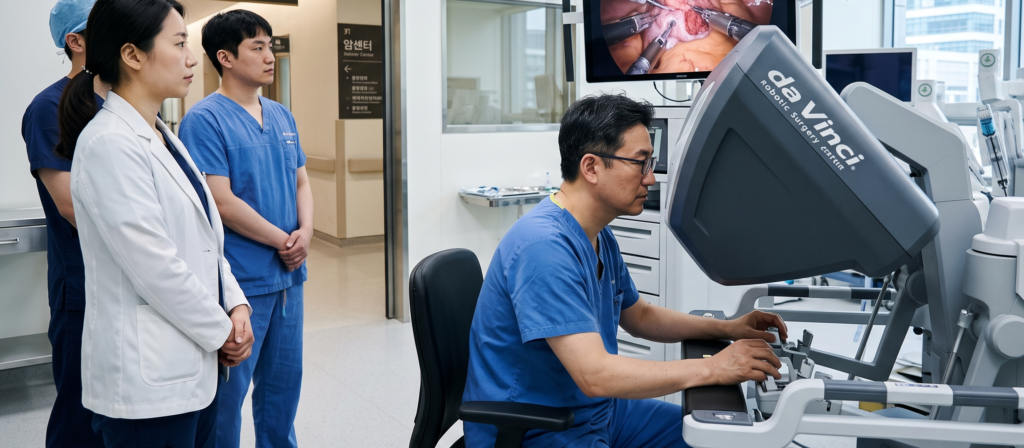
✔ Advanced Robotic Surgery
Korea has one of the highest adoption rates of Da Vinci robotic surgery.
It is widely used for:
- Thyroid cancer
- Prostate cancer
- Colorectal cancer
- Gastric cancer
Robotic surgery offers precision, minimal scarring, and faster recovery.
✔ Precision Medicine & Genetic Testing
Korean hospitals actively use genetic testing and molecular diagnostics to tailor treatment plans based on tumor characteristics.
✔ Highly Experienced Surgeons
Korea’s cancer incidence rate is relatively high, meaning surgeons have extensive experience.
High surgical volume directly contributes to better outcomes and higher survival rates.
🏛️ 3. Major Cancer Surgery Hospitals in Korea
Foreign patients commonly choose the following hospitals due to their expertise, facilities, and international patient services.
✔ 1) Tertiary Hospitals (University Hospitals)
● Seoul National University Hospital
A leading institution with a large cancer center and strong research background.
● Severance Hospital
Known for its multidisciplinary cancer care and high foreign patient volume.
● Samsung Medical Center
Strong in precision medicine, genetic testing, and advanced diagnostics.
● Asan Medical Center
One of the largest cancer surgery centers in Korea with excellent outcomes.
✔ 2) National Cancer Center (NCC)
A government‑run cancer institution specializing in research, diagnosis, and treatment.
✔ 3) Major Private Hospitals
These hospitals offer strong international patient support:
- Seoul St. Mary’s Hospital
- Ewha Womans University Seoul Hospital
- Korea University Anam Hospital
🔬 4. Korea’s Strengths by Cancer Type
Korea excels in several major cancer types due to high surgical volume and advanced techniques.
✔ Gastric Cancer
Korea has one of the highest gastric cancer surgery volumes in the world.
Early detection rates are high, leading to excellent surgical outcomes.
✔ Colorectal Cancer
Minimally invasive surgery—laparoscopic and robotic—is widely used, resulting in faster recovery.
✔ Thyroid Cancer
Korea is globally recognized for thyroid cancer surgery.
Techniques that minimize scarring are highly developed.
✔ Breast Cancer
Korean hospitals offer advanced imaging, genetic testing, and breast‑conserving surgery with high survival rates.
✔ Lung Cancer
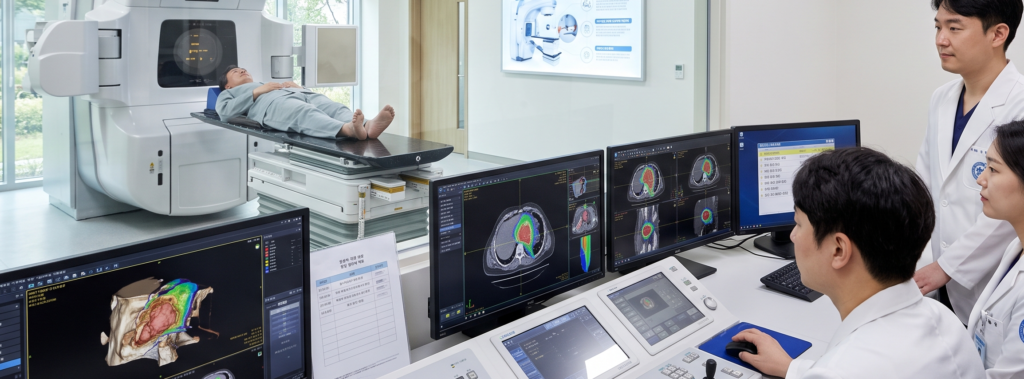
Low‑dose CT screening and precise radiation therapy contribute to strong treatment results.
🌍 5. Treatment Process for Foreign Patients
Foreign patients can expect the following steps when receiving cancer surgery in Korea:
✔ Step 1: Contact the International Patient Center
Interpretation, appointment scheduling, and insurance guidance are provided.
✔ Step 2: Appointment Booking
Foreign patients often receive faster booking compared to local patients.
✔ Step 3: Diagnostic Tests
CT, MRI, PET‑CT, blood tests, and biopsies are performed quickly.
✔ Step 4: Multidisciplinary Review
Specialists evaluate the patient’s condition and finalize the treatment plan.
✔ Step 5: Surgery Scheduling
Dates are arranged based on urgency and patient condition.
✔ Step 6: Hospitalization & Discharge
Nursing care quality is high, and foreign patient support teams assist throughout the stay.
✈️ 6. Preparing Before Traveling to Korea (New Section)
Foreign patients should prepare the following before coming to Korea:
✔ Medical Records
Bring all previous medical documents:
- Diagnosis reports
- Imaging results
- Biopsy results
- Treatment history
- Medication list
✔ Travel Documents
- Passport
- Visa (if required)
- Insurance documents
✔ Communication
Inform the hospital of your preferred language for interpretation.
✔ Financial Preparation
Request a cost estimate from the hospital’s international center.
✔ Accommodation Planning
Book a hotel or serviced apartment near the hospital.
❓ 7. Frequently Asked Questions
Q: How long should I stay in Korea for cancer surgery?
Most patients stay 3–6 weeks, depending on surgery type and recovery.
Q: Can caregivers stay with me?
Yes. Hospitals allow caregivers, and nearby accommodations are widely available.
Q: Is English widely spoken in hospitals?
International centers provide professional interpreters.
Q: How do I pay hospital bills?
Hospitals accept credit cards, bank transfers, and international insurance (depending on coverage).
Q: Do I need follow‑up visits?
Yes. Most patients return for follow‑up within 1–2 weeks after surgery.
🌐 8. Korea vs. U.S./Europe/Middle East
✔ Cost
Korea is significantly more affordable than the U.S. and Europe.
✔ Waiting Time
Korea offers fast diagnostics and surgery scheduling.
✔ Technology
Robotic surgery and imaging equipment are widely available.
✔ Medical Outcomes
Korea’s survival rates for major cancers are among the highest globally.
🩺 9. Post‑Surgery Care in Korea
After surgery, patients receive:
- Pain management
- Wound care
- Follow‑up imaging
- Medication guidance
- Rehabilitation (if needed)
Foreign patients can also request extended interpretation support during recovery.
🧭 10. Cultural Tips for Foreign Patients
- Korean hospitals are highly organized and punctual.
- Nurses and staff may speak limited English, but international centers assist.
- Hospital food is mild and healthy; alternative meals are available nearby.
- Korea is safe, clean, and easy to navigate.
🛬 11. Accommodation & Stay Information
Cancer surgery may require extended stays.
Foreign patients should consider:
- Hotels or serviced apartments near hospitals
- Transportation options
- Facilities for caregivers
- Long‑term stay visa requirements
- Local convenience stores, pharmacies, and restaurants
Korea’s urban infrastructure makes long‑term stays comfortable and safe.
🔗 Useful Medical Information Resources in Korea
Foreign patients can explore Korean medical insights, hospital introductions, and healthcare‑related information through:
K Doctor Interview — https://kdoctorinterview.com
Korean Hospital Information Service
National Cancer Center Korea