Eye Doctor in Seoul for Tourists: Pink Eye, Eye Infections, Contact Lens Problems and Lost Glasses

Eyes are one of those things you don’t think about on a trip until something goes wrong. A long flight with contact lenses in, a few late nights, maybe a swim or a sheet mask that got too close, and suddenly one eye is red, itchy and watering in the middle of a Myeongdong street. Or your glasses slip off at a café and crack, and you realize your spare pair is at home.
I haven’t needed an eye doctor in Seoul myself, so I looked into how it actually works for visitors: where to go for an infection or irritation, what an optical shop can and can’t do, and when an eye problem means going straight to a hospital. Here’s what I found.
Eye Clinic or Optical Shop? Know the Difference
This is the first thing worth getting straight. In Korea, an eye clinic (안과, angwa) is run by an ophthalmologist, a medical doctor who can diagnose and treat infections, injuries and other eye conditions and prescribe eye drops. An optical shop (안경원, angyeongwon) is run by opticians, who under Korean law can do vision tests, make glasses and sell contact lenses, but they don’t treat eye diseases.
So if your eye is red, painful, swollen or producing discharge, go to an eye clinic. If your eyes are fine but you’ve lost or broken your glasses, an optical shop is what you want.
Red, Itchy or Irritated Eyes: Seeing an Eye Doctor
For common problems like pink eye (conjunctivitis), a stye, an irritated eye from contact lenses or something stuck in your eye, a neighborhood eye clinic is usually the easiest place to go. Many small clinics in Korea see walk-in patients, and there are eye clinics in most busy areas of Seoul. Search 안과 on Naver Map or KakaoMap, check the hours, and go during the day if you can.
Bring your passport, since as a tourist you’ll pay the full cost yourself without Korean health insurance. If you wear contact lenses, take them out and bring your glasses or the lens case, and tell the doctor what lenses you use and how long you’ve had them in. The doctor will usually look at your eye with a slit lamp, a small microscope, and you’ll get a prescription for eye drops to pick up at a pharmacy nearby.
Language can be a hurdle at small clinics. A translation app works for the basics, and 1330, the Korea Tourism Organization’s travel hotline, can interpret in English, Japanese and six other languages from 7 a.m. to midnight. If you’d rather book in advance, larger hospitals in Seoul have international patient centers, though they usually work by appointment on weekdays.
If You Wear Contact Lenses
If your eye turns red or starts to hurt while you’re wearing contacts, take them out and switch to glasses until you’ve seen a doctor. It’s tempting to push through a sightseeing day, but a painful red eye in a lens wearer is something eye doctors generally want to check soon, because some infections linked to contact lenses can get worse quickly. Don’t put the same lenses back in, and keep the case to show the doctor.
When to Go Straight to a Hospital
Some eye problems shouldn’t wait for a clinic to open. Go to a hospital emergency room, or call 119, if you suddenly lose vision or it becomes very blurry in one eye, if you have severe eye pain, if something hits your eye hard or cuts it, or if a chemical gets in your eye. For a chemical splash, rinse the eye with plenty of clean water right away, then go. Large university hospitals in Seoul have their own eye departments, which makes their emergency rooms a sensible choice for a serious eye injury.
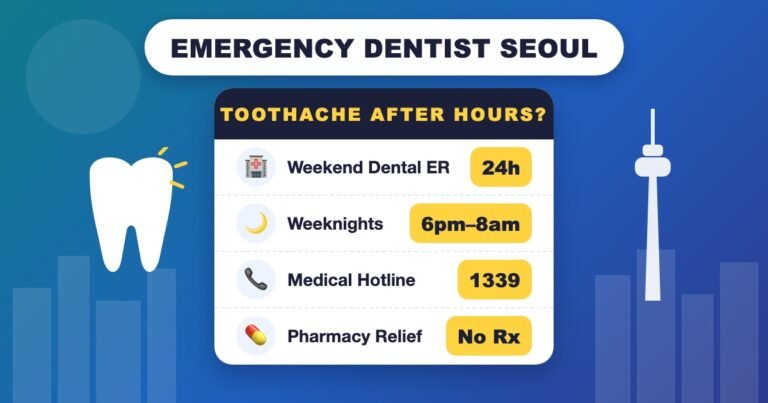
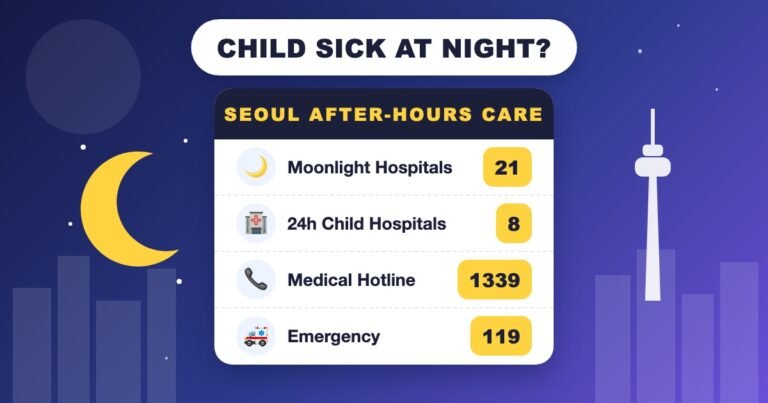
At night or on a weekend, when small clinics are closed, 1339, Korea’s 24-hour medical information line, can connect you with an interpreter and tell you what’s open nearby. I explained how to use 1339 and the E-Gen site in more detail in my guide to getting medical care at night in Seoul.
Lost or Broken Glasses? This Part Is Easy in Seoul
Here’s the good news. Korea is known for getting glasses made fast, so much so that many tourists now plan a stop at an optical shop on purpose. A Korea JoongAng Daily report in October 2026 described tourists in Myeongdong getting an eye test and a new pair in under half an hour, with one shop owner in Namdaemun saying they almost always have glasses ready within 30 minutes. A Korea Times report from December 2025 put the whole process at about 30 minutes to an hour for standard prescriptions.
The optician does the vision test in the shop, so you don’t need to bring a prescription, though having your old one helps. Strong prescriptions or special lenses can take a day or two if the shop has to order them, so if you’re leaving soon, say so when you order. Prices depend on the frames and lenses you choose. If you’re interested in eye surgery like LASIK while you’re here, that’s a separate, planned visit, which I covered in my Korean eye clinic guide.
Papers for Insurance
If you have travel insurance, ask the clinic for a receipt (영수증) and an itemized statement (세부내역서) before you leave, and an English medical certificate if your insurer needs one. It’s much easier to get these on the spot than after you’ve flown home.
What I’d Pack for My Eyes Next Time
A spare pair of glasses, even an old one. Fewer days in contact lenses than I think I need, especially on flight days. And three things saved in my phone: 119, 1339, and the word 안과. Most eye problems on a trip are small and easy to treat, as long as you don’t wait too long with the painful ones.
This guide is general information, not medical advice. If you’re unsure how serious your symptoms are, see a doctor. Details reflect Korean sources as of November 2026.
Related Posts

Discover more from KOREA MEDI HUB. COM
Subscribe to get the latest posts sent to your email.