Chronic Pain Treatment: Nerve Blocks, Herniated Discs, and When to See a Pain Specialist

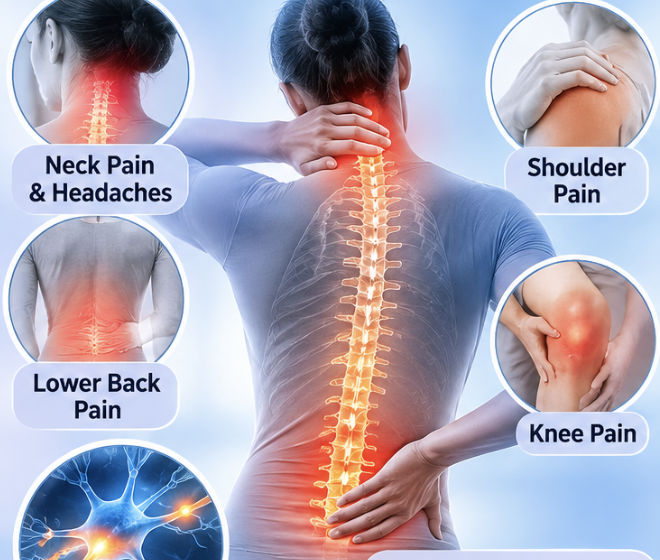
Pain that starts in the lower back and travels down the leg is one of the most common reasons people seek medical care. However, pain can also develop in the neck, shoulders, or head, persist after surgery, or continue long after shingles has healed. Understanding the underlying cause is essential for choosing the right treatment.
A pain management specialist evaluates pain not simply as a symptom of another condition, but also as a medical problem that may require targeted treatment, particularly when it becomes chronic.
Common Conditions Treated by Pain Management Specialists
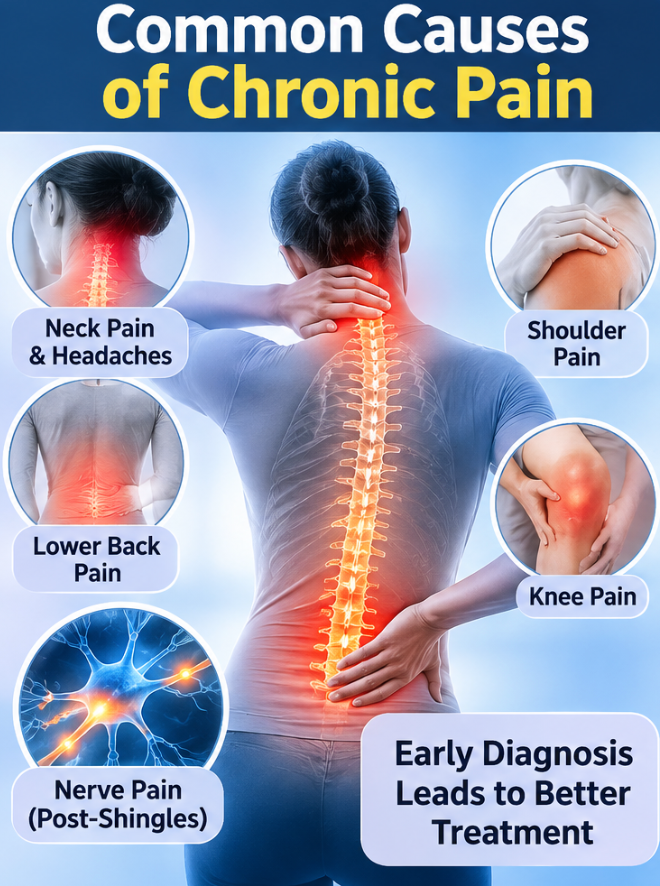
Patients often seek pain management for lower back pain that radiates into the legs, neck pain associated with headaches, shoulder pain, and persistent pain following surgery. Other common conditions include postherpetic neuralgia, a type of nerve pain that can remain after shingles, and chronic musculoskeletal pain.
Some patients experience sudden pain without an obvious injury, while others have struggled with persistent symptoms despite visiting multiple medical facilities. In these cases, identifying the source of the pain and determining whether nerves are involved are important steps toward effective treatment.
Can Neck Problems Cause Severe Headaches and Eye Pain?
Neck-related headaches may cause pain in the back of the head or along the sides of the head. In some cases, patients may also experience tenderness around the scalp or pain that seems to extend toward the eyes.
When the symptoms are related to cervical nerves or surrounding structures, a pain specialist may consider medication or targeted nerve block injections to help relieve the pain.
However, severe headaches accompanied by visual disturbances, ringing in the ears, weakness, numbness, or other neurological symptoms require careful evaluation. Depending on the symptoms, assessment by a neurologist or another appropriate specialist may be necessary. A sudden, severe headache or sudden vision loss requires emergency medical attention.
Pain Management vs. Orthopedics and Rehabilitation Medicine
Orthopedics, rehabilitation medicine, and pain management all treat conditions involving the back, neck, shoulders, knees, and other parts of the musculoskeletal system. Their areas of practice can overlap, but their treatment approaches may differ.
Pain management focuses specifically on understanding and controlling pain, especially when it persists or interferes with daily activities.
In the past, pain was often considered an unavoidable consequence of an injury, surgery, or underlying disease. Modern medical research has shown that persistent pain can involve changes in the nervous system and may continue even after the original injury has healed.
Chronic pain can affect sleep, mobility, emotional well-being, and the ability to work or perform everyday activities. Recognizing it as a condition that deserves appropriate evaluation and treatment is an important part of pain management.
Why Does Chronic Pain Sometimes Continue After Surgery?
Postoperative pain does not always disappear when the surgical wound heals. In some cases, nerves may be injured during surgery or affected by the healing process.
Nerve damage, abnormal nerve regeneration, and scar tissue surrounding nerves can contribute to persistent pain, unusual sensations, or increased sensitivity. Some patients develop a condition known as chronic postsurgical pain.
Treatment begins with identifying the possible source of the symptoms. Depending on the findings, a specialist may consider medication, targeted nerve blocks, rehabilitation, or other individualized approaches.
Postherpetic neuralgia is another example of persistent nerve pain. After a shingles infection, some patients continue to experience burning, stabbing, or electric-shock-like pain in the affected area. This can occur because the infection has damaged or altered the function of the nerves.
Treatment may include medications specifically used for neuropathic pain and, in selected cases, targeted nerve procedures. The most appropriate approach depends on the affected nerve, symptom severity, and the patient’s overall health.
Do Herniated Discs Always Require Surgery?
A herniated disc can cause lower back or neck pain and may produce radiating pain, numbness, or weakness when nearby nerves are affected.
However, a herniated disc does not automatically mean that surgery is necessary. Many patients improve with nonsurgical treatment, depending on the severity of the condition and the presence of neurological symptoms.
Conservative treatment may include appropriate medication, physical therapy, activity modification, and selected injection procedures. Nerve blocks or other interventional treatments may be considered when symptoms persist and the clinical findings support their use.
Surgery may be recommended when there is significant or progressive neurological impairment, certain emergencies involving nerve compression, or persistent disabling symptoms despite appropriate nonsurgical care.
The decision should be based on the patient’s symptoms, physical examination, imaging findings, and response to treatment rather than on the diagnosis alone.
What Treatments Are Used in a Pain Clinic?
Pain management specialists may use several approaches to reduce pain and improve daily function.
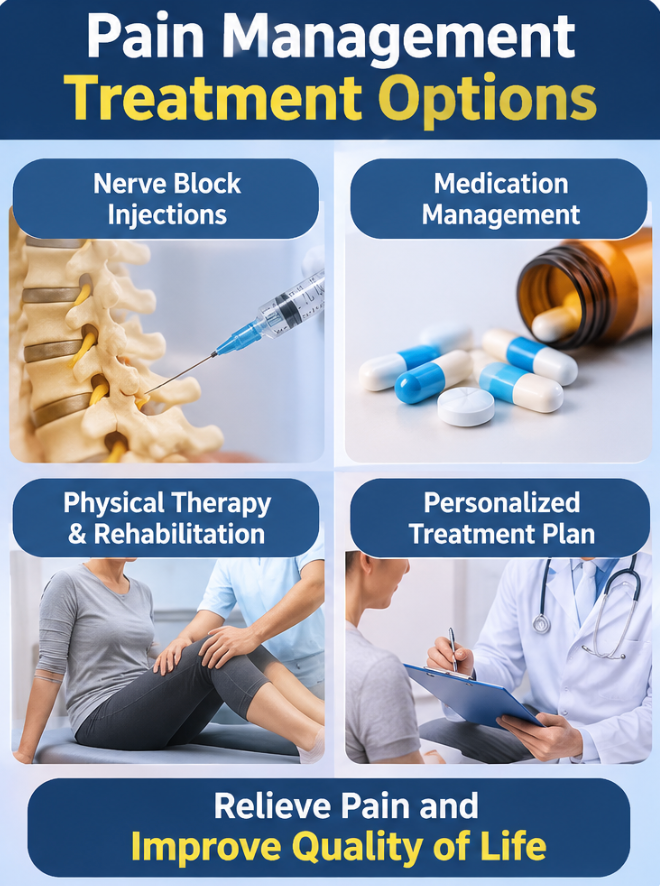
1. Nerve block injections
Nerve blocks involve administering medication near a targeted nerve or group of nerves to reduce pain signals. They may be considered for selected cases of nerve-related pain, spinal pain, or certain headaches.
2. Nerve procedures
Depending on the diagnosis, procedures such as epidural injections or other image-guided interventions may be considered. Some patients may be candidates for more specialized procedures when simpler treatments have not provided sufficient relief.
3. Medication management
Medications are selected according to the type of pain, its severity, other medical conditions, and potential side effects. Neuropathic pain, inflammatory pain, and muscular pain may respond differently to treatment.
4. Individualized treatment plans
Treatment may combine medication, physical rehabilitation, activity modification, and interventional procedures. The goal is not simply to reduce pain temporarily, but also to improve mobility, sleep, and quality of life.
Preventing Acute Pain From Becoming Chronic
Acute pain often develops in response to an injury, inflammation, or another identifiable problem. Chronic pain persists beyond the expected healing period and may involve ongoing changes in how the nervous system processes pain.
Not every case of acute pain develops into chronic pain, and the transition cannot always be predicted. However, timely evaluation, appropriate treatment, and a gradual return to normal activity when medically suitable may help support recovery.
For people who already have chronic pain, treatment often requires a longer-term approach. The aim may be to reduce pain intensity, improve sleep, restore mobility, and make everyday activities more manageable.
When Should You Visit a Pain Management Clinic?
Consider seeking a professional assessment if you experience persistent lower back pain that radiates into the legs, recurring neck pain with headaches, nerve pain following surgery, lingering pain after shingles, or chronic pain that interferes with sleep and daily activities.
A pain specialist can evaluate the symptoms, review previous treatments, and determine whether medication, nerve blocks, rehabilitation, or another approach may be appropriate.
Pain treatment should always begin with understanding the cause. Simply receiving an injection without an adequate diagnosis may not address the underlying problem.
The ultimate goal of pain management is to help patients reduce their discomfort, improve their ability to move and function, and return to everyday life as safely and comfortably as possible.
Discover more from KOREA MEDI HUB. COM
Subscribe to get the latest posts sent to your email.