Americans Were Shocked by a Korean Hospital Bill After 3 Days in the ER, Hospitalization, and Antivenom Treatment

Why Americans Are Surprised by Korean Hospitals
There was an American traveler who was bitten by a venomous snake while exploring a forest in South Korea. The question many people asked was simple: how much would this have cost in the United States, and how much did it cost in Korea?
The traveler, known on TikTok as “Captain Finn,” was searching for wildlife in the forests around Jeonju when a venomous snake bit his finger. His hand quickly swelled, and he was taken to a hospital by ambulance.
After receiving emergency treatment and antivenom, doctors recommended hospitalization. He spent three days in the hospital. Later, he revealed the final bill: ambulance transportation, antivenom treatment, and a three-day hospital stay for a total of $1,163.
American viewers were stunned.
Many commented that the same treatment in the United States could easily have exceeded $100,000.
Their reaction reflects a broader reality. According to KFF Health News, roughly 41% of American adults have experienced medical debt at some point.
And this is not just one person’s story.
Two sisters visiting from Finland experienced an accident on their first day in Seoul. One slipped in a bathroom and suffered a deep cut on her knee. A 119 ambulance arrived quickly and transported her to the emergency room.
An American resident in Korea named Crystal also used Korea’s emergency ambulance service after experiencing severe pain. She later explained that the paramedics helped communicate in English and even made sure she had the appropriate documents with her.
One of the biggest surprises for many foreigners is that Korea’s 119 emergency ambulance service is free of charge.
In contrast, ambulance transportation in the United States can be extremely expensive. Studies have estimated the average ambulance ride at roughly $1,383.
Foreign visitors are also impressed by Korea’s speed of care.
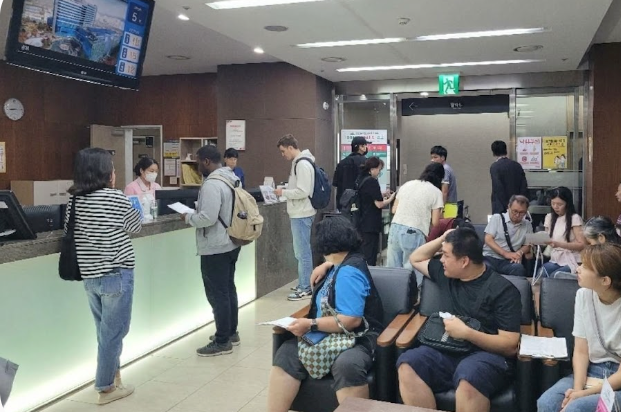
A British traveler named Posh described visiting a Korean hospital and being guided directly to a specialist through the international patient center. With very little waiting, he received treatment in a facility he compared to a hotel lobby because of its cleanliness and comfort.
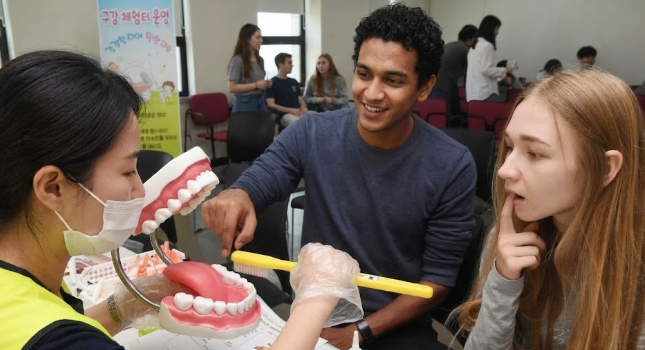
Similar stories appear in dental care.
He noted that a dental procedure in Korea cost less than a simple filling in the United Kingdom.
As a result, medical tourism has become increasingly popular among Americans.
One American traveler, Chris, had wanted LASIK surgery for years. In the United States, the procedure can cost approximately $3,000 to $5,000 per eye, making it difficult to afford.
Eventually, he decided to have the surgery in Seoul.
As healthcare costs continue to rise in the United States, many Americans are traveling abroad to countries such as South Korea, Thailand, and Mexico for treatment. Lower costs and faster access to care are among the biggest reasons.
What foreigners repeatedly say about Korean hospitals is not simply that they are inexpensive.
They talk about rapid emergency care, reasonable costs, short waiting times, and services designed specifically for international patients.
That is why so many leave Korea asking the same question:
“Can healthcare this good really cost this little?”
The story did not end with the snakebite.
Another American traveler, Chris, had worn glasses since childhood and had always wanted LASIK surgery. However, U.S. prices, sometimes reaching $5,000 per eye, kept him from moving forward.
While visiting Seoul, he visited an eye clinic. After a series of examinations, he was surprised to learn that surgery could be performed that very afternoon.
The following day, his vision test showed remarkable results.
One month later, he reported that he no longer needed glasses and praised both the medical staff and their English-language support.
The comment section quickly filled with reactions.
Many viewers described the experience as receiving “first-class treatment at an economy-class price.”
Medical tourism continues to expand for exactly these reasons: lower costs, shorter waiting times, and high-quality care. [businessinsider.com]
Another example came from an American woman named Victoria.
After visiting a U.S. dentist, she received an estimated treatment plan costing $5,000. Because she lacked insurance, she decided to seek treatment in Korea instead.
To her surprise, the Korean dentist told her that some of the expensive procedures suggested in America were not actually necessary.
She was also impressed by the technology. Instead of multiple traditional X-rays, a panoramic imaging system captured everything quickly and efficiently.
Her final bill for X-rays, a dental examination, and professional cleaning came to approximately $68.
Comments from viewers followed immediately.
Some Canadians reported paying around $300 for similar services, while others with experience in American dentistry mentioned concerns about unnecessary procedures in certain clinics.
An American couple from Seattle shared another story.
After moving to Seoul, the wife became seriously ill with flu-like symptoms. They visited a neighborhood clinic expecting a long wait.
Instead, within about twenty minutes she had received an examination, a chest X-ray, the results, a prescription, and medication.
The husband summarized the experience with a single sentence:
“If you’re going to get sick, get sick in Korea.”
Another foreign resident, Alex from Poland, underwent a comprehensive medical examination at a Korean university hospital.
The biggest surprise?
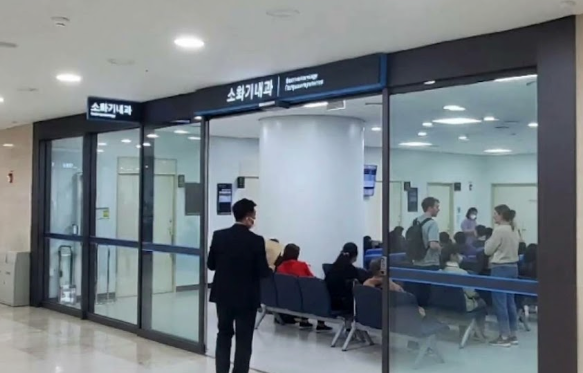
Every test was conducted within the same building.
Instead of scheduling multiple appointments at different locations, he moved from one examination room to the next until everything was finished.
He explained that in many European healthcare systems, those same tests could require separate appointments spread over several weeks.
Why Americans Continue to Be Amazed by Korean Healthcare (Part 3)
One of the most surprising things for Americans is something many Koreans never think twice about: medication packaging.
In Korea, prescriptions are often organized into small packets for breakfast, lunch, and dinner. Patients do not have to remember which pills to take or when to take them.
Many foreigners describe the system as simpler, safer, and more convenient.
Online comments included stories from Americans who paid $7,000 for a brief emergency room visit despite having insurance, as well as Europeans who struggled to obtain even basic blood tests.
American resident Katherine described Korea’s health screening system as feeling like a highly efficient conveyor belt.
Another American, Max, underwent a full health checkup in Korea without Korean health insurance. Blood tests, examinations, and a dental cleaning were all completed in a single day.
Meanwhile, an American tourist suffering from chronic back pain visited a Korean pain clinic.
After conducting X-rays and ultrasound examinations, doctors discovered that the real problem was not his back at all. Instead, they found a severe ankle ligament injury that had never healed properly.
Following injections and shock-wave therapy, he described the experience as impressive and thorough.
Alex, an American who has lived in Korea for more than a decade, believes the biggest difference is Korea’s national health insurance system.
As he explains, medical expenses remain relatively affordable from the moment patients enter a hospital until they pick up medication at a pharmacy.
He says his typical doctor visit and prescription costs only a few dozen dollars.
The gap becomes even more obvious with major surgeries.
Using heart valve replacement surgery as an example, Alex explained that a patient’s out-of-pocket cost in Korea can be around $10,000 after insurance, while comparable procedures in the United States may reach $170,000.
These differences are helping attract more international patients every year.
Reuters reported that the number of foreign patients visiting South Korea exceeded 2 million, nearly doubling from the previous year.
Korea was not always known for affordable healthcare. Universal health insurance coverage expanded gradually, beginning in 1977 and reaching nationwide coverage in 1989.
Today, people from some of the world’s wealthiest countries visit Korean hospitals, look at their medical bills, and ask the same question:
“Is this really all I have to pay?”
Objective Comparison Data
South Korea’s National Health Screening Program
Employees and self-employed residents covered by the National Health Insurance Service (NHIS) are eligible for regular health screenings that include the following tests:
| Category | Examination Items |
| Physical Measurements | Height, Weight, Waist Circumference, BMI |
| Blood Pressure | Hypertension Screening |
| Vision & Hearing | Basic Vision and Hearing Tests |
| Blood Tests | Anemia, Liver Function, Kidney Function, Blood Glucose |
| Lipid Profile | Total Cholesterol, HDL, LDL, Triglycerides |
| Urine Test | Proteinuria and Other Indicators |
| Chest Examination | Chest X-ray |
| Dental Examination | Teeth and Gum Checkup |
In a single visit, participants can typically receive more than 20 health indicators and screening results.
Family Benefits Under Korea’s National Health Insurance
| Eligible Person | Health Insurance Benefits |
| Employee Subscriber | Regular National Health Screening |
| Spouse (Dependent) | Covered Under the Same Insurance Plan |
| Parents (Dependent) | Eligible if Dependency Requirements Are Met |
| Children (Dependent) | Eligible if Age and Dependency Requirements Are Met |
In other words, one employee can register qualifying family members as dependents, allowing them to receive National Health Insurance coverage without paying separate premiums.
Korea vs. United States Healthcare Experience
| Category | South Korea | United States |
| Ambulance Service | 119 Emergency Ambulance Free of Charge | Often Hundreds to Thousands of Dollars |
| National Health Screening | Regular Government-Supported Screening | Varies by Insurance Coverage |
| Outpatient Visits | Relatively Affordable | Can Be Expensive Without Insurance |
| Prescription Medication | Insurance Coverage Widely Applied | Higher Out-of-Pocket Costs |
| Waiting Time | Same-Day Appointments Often Available | Specialist Wait Times Can Range From Weeks to Months |
| Medical Tourism | Growing International Destination | Increasing Number of Patients Seeking Treatment Abroad |
Why Foreigners Are Surprised by Korean Healthcare
Many foreigners who experience Korean healthcare say the same thing.
It is not simply that healthcare is cheaper.
What surprises them is the entire process:
- Fast access to doctors
- Multiple tests completed in a single visit
- Immediate prescriptions and pharmacy access
- Modern medical facilities
- Efficient hospital workflow
- Affordable out-of-pocket costs
For many visitors from countries such as the United States, the United Kingdom, and Canada, Korean healthcare feels less like a hospital visit and more like a highly organized service experience.
Perhaps the most surprising part is not the quality, nor the speed, nor even the cost.
It is that all three exist at the same time.
That is why so many foreigners look at the bill twice and ask:
“Wait… that’s all I have to pay?”
Note
The stories in this article were compiled and summarized from experiences shared by foreign visitors and residents in South Korea through YouTube videos, Instagram posts, and other publicly available social media content.